
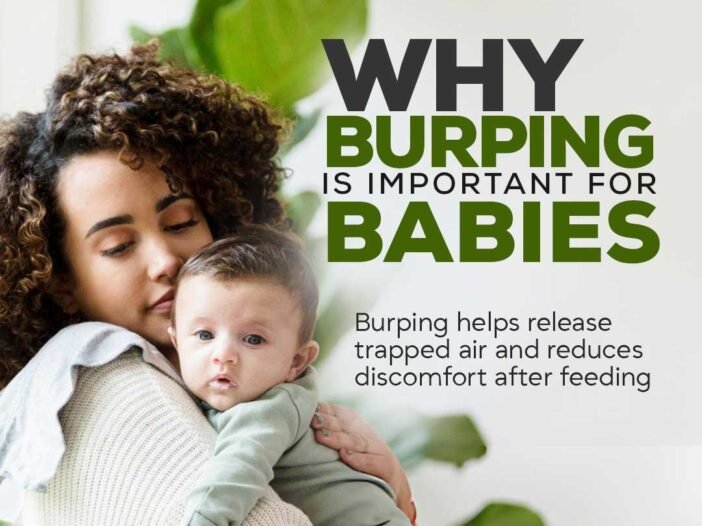
Feeding time is one of the most precious bonding moments between a parent and a baby. Whether you are breastfeeding or bottle-feeding, ensuring your baby is comfortable after feeding is just as important as the feeding itself. One simple yet essential step that many new parents overlook is burping.
Burping plays a crucial role in a baby’s digestion, comfort, and overall well-being. Understanding why burping is important, when to do it, and how to do it correctly can help reduce discomfort, crying, and feeding-related issues in babies.
What Happens When Babies Feed?
When babies feed, they often swallow air along with milk. This is completely normal, especially because:
- Babies’ digestive systems are still developing
- Bottle feeding can allow more air intake
- Some babies latch imperfectly while breastfeeding
- Fast feeding or crying before feeding increases air intake
This swallowed air gets trapped in the baby’s stomach. Since babies cannot release this air on their own, it can cause discomfort unless gently helped out through burping.
Why Burping Is Important for Babies
1. Relieves Trapped Air
Burping helps release air bubbles trapped in the baby’s stomach. If the air remains inside, it can cause pressure and discomfort, making the baby fussy or restless.
2. Reduces Gas and Colic Symptoms
Excess gas is one of the most common causes of colic-like symptoms in infants. Regular burping can:
- Reduce gas buildup
- Prevent excessive crying
- Improve feeding comfort
While burping may not eliminate colic entirely, it significantly reduces discomfort related to gas.
3. Prevents Spit-Ups and Vomiting
When air is trapped in the stomach, it pushes milk back up, leading to spit-ups. Proper burping helps:
- Reduce frequent spit-ups
- Keep feeds down
- Prevent messy and uncomfortable reflux episodes
4. Improves Feeding Efficiency
A baby with trapped air may feel full too quickly and stop feeding early. Burping allows the baby to release air and continue feeding comfortably, ensuring better milk intake and nutrition.
5. Promotes Better Sleep
Gas discomfort often worsens when babies lie down. Burping before sleep helps babies:
- Feel more relaxed
- Sleep longer and deeper
- Wake up less frequently due to discomfort
A well-burped baby is more likely to settle calmly after feeding.
When Should You Burp Your Baby?
- During feeding (especially for bottle-fed babies)
- After every feeding session
- When switching breasts during breastfeeding
- Before placing the baby down to sleep
Some babies need frequent burping, while others may need it less. Observing your baby’s comfort cues helps determine what works best.
How Often Should You Burp a Baby?
- Newborns: Burp after every feeding and sometimes during feeding
- Bottle-fed babies: Burp every 2–3 ounces
- Breastfed babies: Burp when switching breasts and after feeding
As babies grow older, they swallow less air and may not need burping as frequently.
Common Burping Positions
Over-the-Shoulder Burp
Hold your baby upright against your shoulder, gently supporting their neck and back. Light pats or rubs on the back help release air.
Sitting-Up Burp
Sit the baby on your lap, support the chest and chin, and gently pat the back.
Face-Down Lap Burp
Lay the baby face-down across your lap with the head slightly elevated and gently pat the back.
Each baby responds differently, so trying multiple positions helps find what works best.
How Long Should You Burp a Baby?
Burping usually takes anywhere from a few seconds to a few minutes. If no burp comes out after a reasonable time and the baby seems comfortable, it’s okay to stop.
Not all babies burp every time—and that’s normal.
Signs Your Baby Needs Burping
- Squirming or arching the back
- Fussiness during or after feeding
- Clenched fists
- Pulling legs toward the stomach
- Crying soon after feeding
Responding early helps prevent discomfort from worsening.
Is Burping Always Necessary?
Most babies benefit from burping, especially in the first few months. However, some babies naturally swallow less air and may not need frequent burping. The key is to observe your baby’s comfort and behavior rather than following a rigid rule.
Final Thoughts for Parents
Burping may seem like a small step, but it has a big impact on your baby’s comfort and digestion. Making burping a regular part of your feeding routine can lead to:
- Happier feeding times
- Less crying and discomfort
- Better sleep for both baby and parents
At Happy Sprouts – Mom & Kids Shop, we believe informed parenting creates confident parents. From feeding essentials to baby comfort products, we support every stage of your parenting journey with care and quality.
Because a comfortable baby is a happy baby—and happy babies help families grow happier together.


Leave a Reply